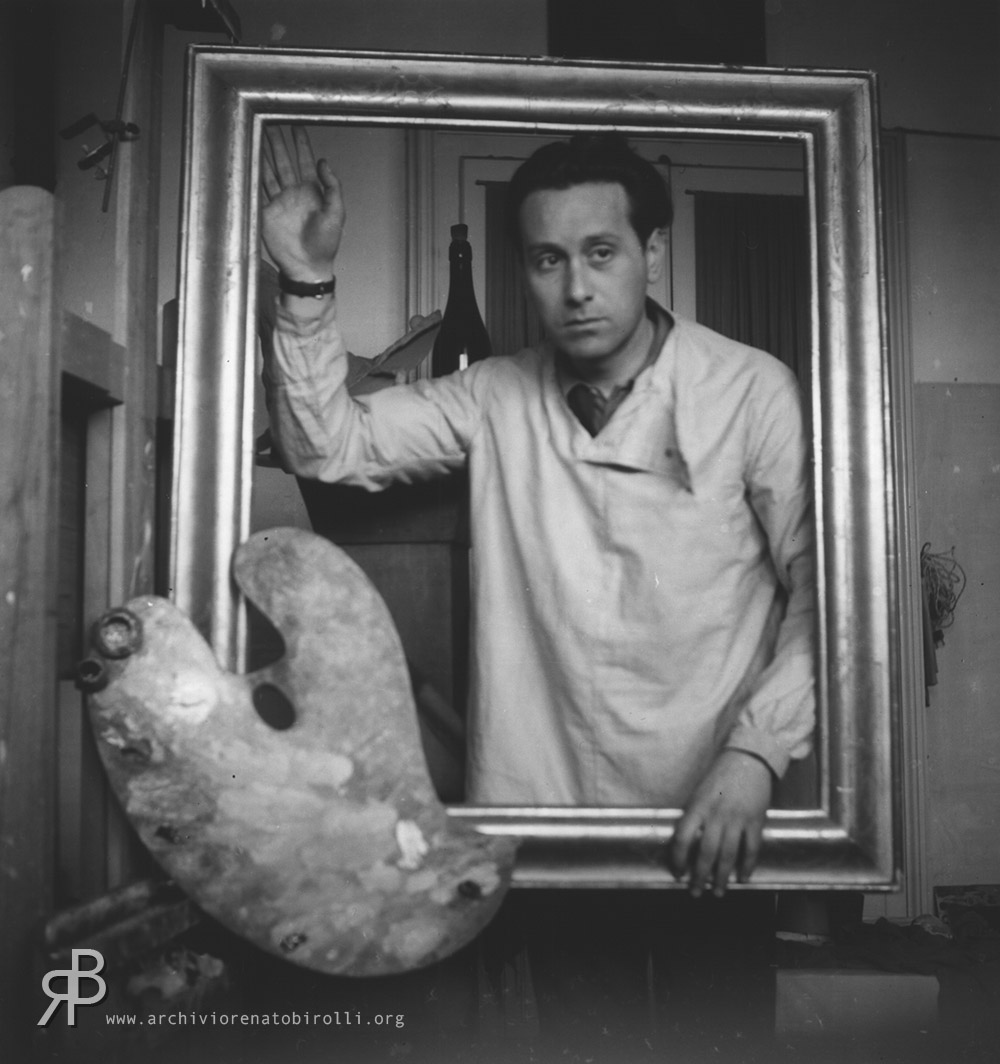
In 1928, Birolli moved to Milan, where he initially lived with his sister on Corso di Porta Vittoria; the following year, he established a studio in via Solferino.
After working in a variety of occupations, including as a sports reporter and insurance agent, he found employment as a proofreader at L’Ambrosiano, where he met Carlo Carrà. In 1930, he made his debut at the XVII Venice Biennale, exhibiting two landscapes.
While in Milan he met and became friends with the critic Edoardo Persico, who introduced a younger generation of artists in Milan, including Guttuso, Manzù and Sassu, to the lessons of Impressionism and Primitivism, in deliberate opposition to the conventions of the Novecento Italiano. These were the years of the gatherings at the Bar Craja and the Caffè Mokador, as well as of the exhibitions at the Galleria del Milione, where Birolli first showed his work in November 1930.
During these years, Birolli wrote reviews and articles for numerous newspapers and journals, including L’Ambrosiano, Il Brennero, L’Italia vivente, the Bollettino della Galleria del Milione, Quadrante and Il Ventuno. He also exhibited widely: at Pier Maria Bardi’s gallery in Rome in 1932, in the group exhibition Dieci Pittori, at the VI Sindacale Lombarda, at the Franco-Italian painting exhibition in London, and at an exhibition of contemporary Italian painting in San Francisco. From 1932 onwards, he lived and worked in Piazzale Susa.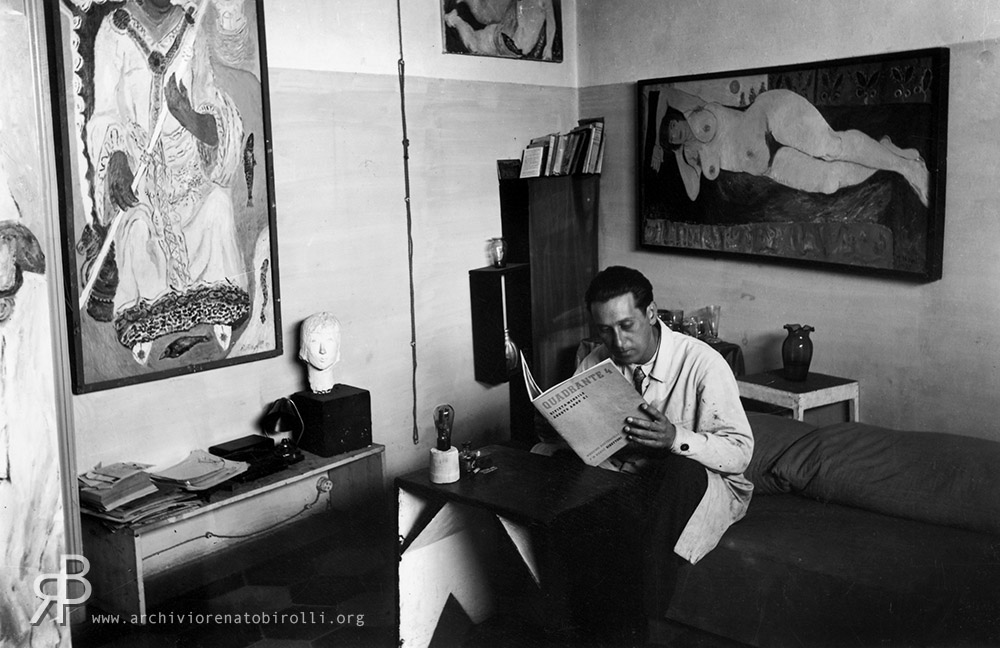
Among the works dating from his early Milanese years are San Zeno pescatore (1931) and Il taxi rosso (1932), both expressions of a maniera chiara from which he soon departed, transforming the chromatic sensibility of his native Veneto into a renewed form of lyrical Expressionism, as exemplified by Il caos (1937).