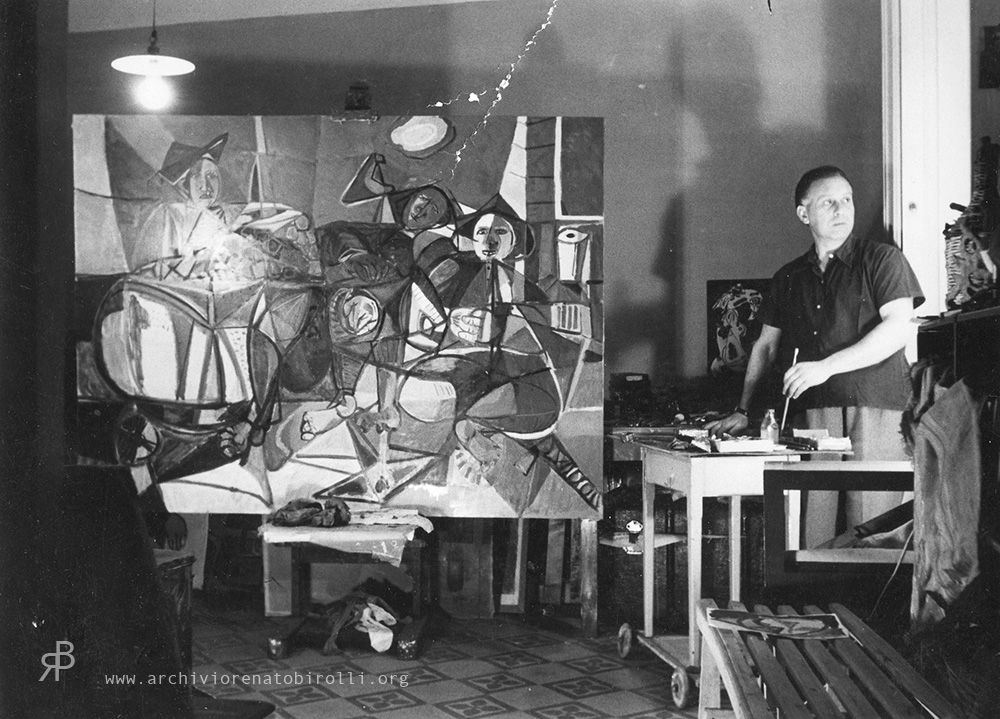
In 1946, Birolli was among the promoters of the Nuova Secessione Artistica, subsequently renamed the Fronte Nuovo delle Arti, which was granted a dedicated gallery at the XXIV Venice Biennale in 1948, featuring works by Birolli, Guttuso, Corpora, Santomaso, Morlotti and Vedova, among others.
In 1947, he spent an extended period in Paris with Morlotti as a recipient of a French government scholarship.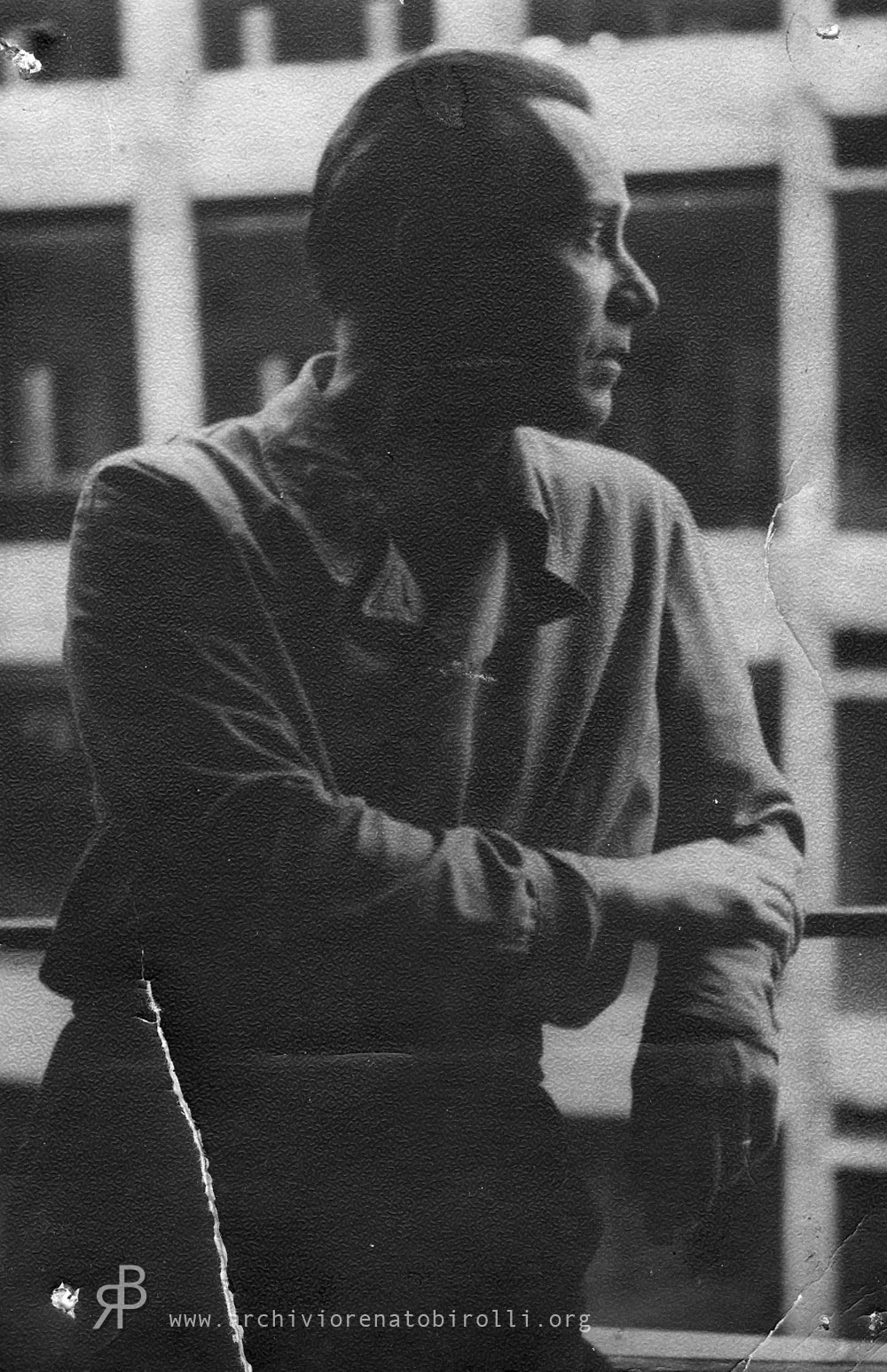
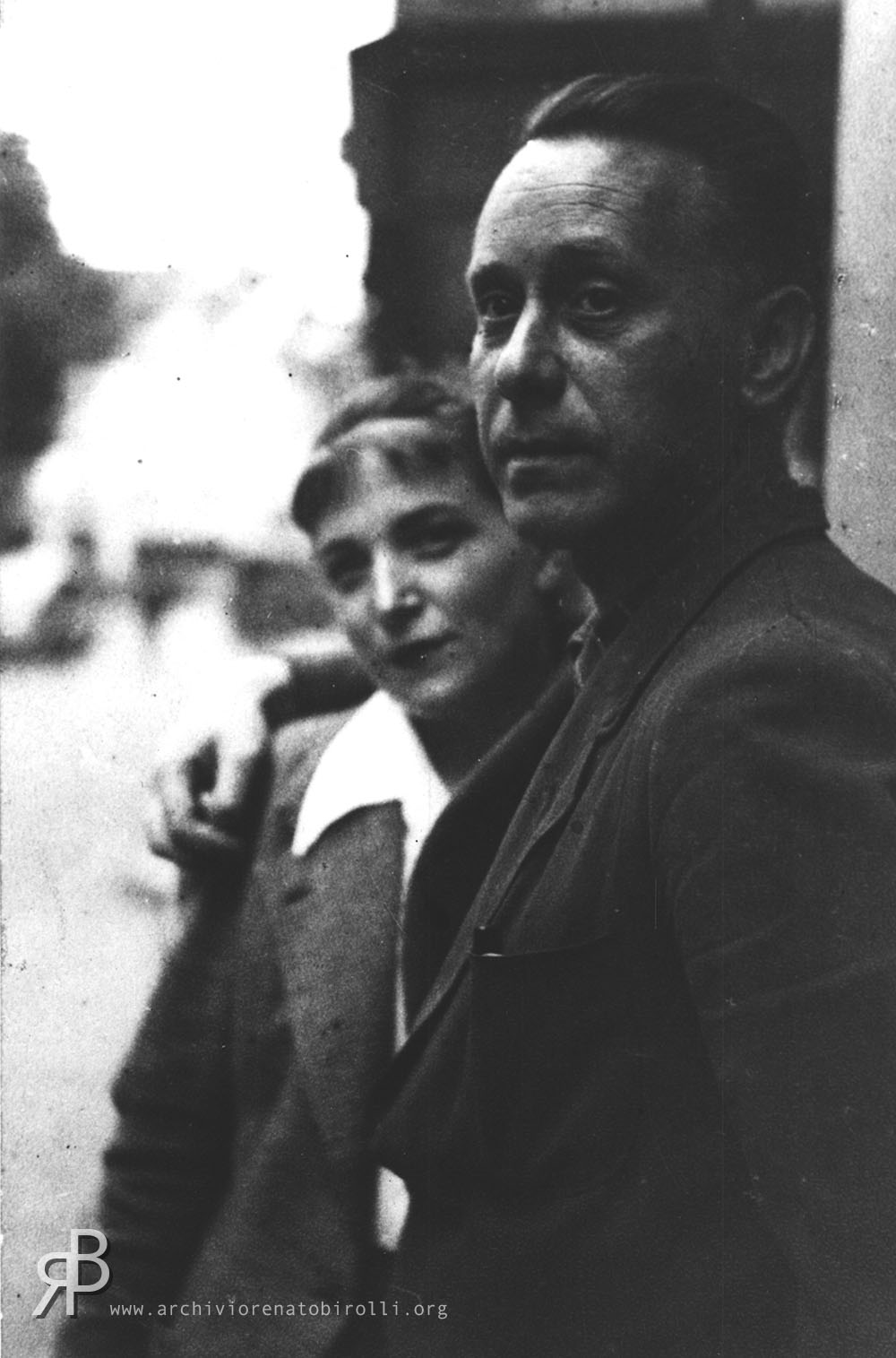
There, he met Pablo Picasso and associated with painters linked to the abstract current of the Nouvelle École de Paris, including Óscar Domínguez, Henri-Georges Adam, Nicolas de Staël, Édouard Pignon, Jean Bazaine and Hans Hartung.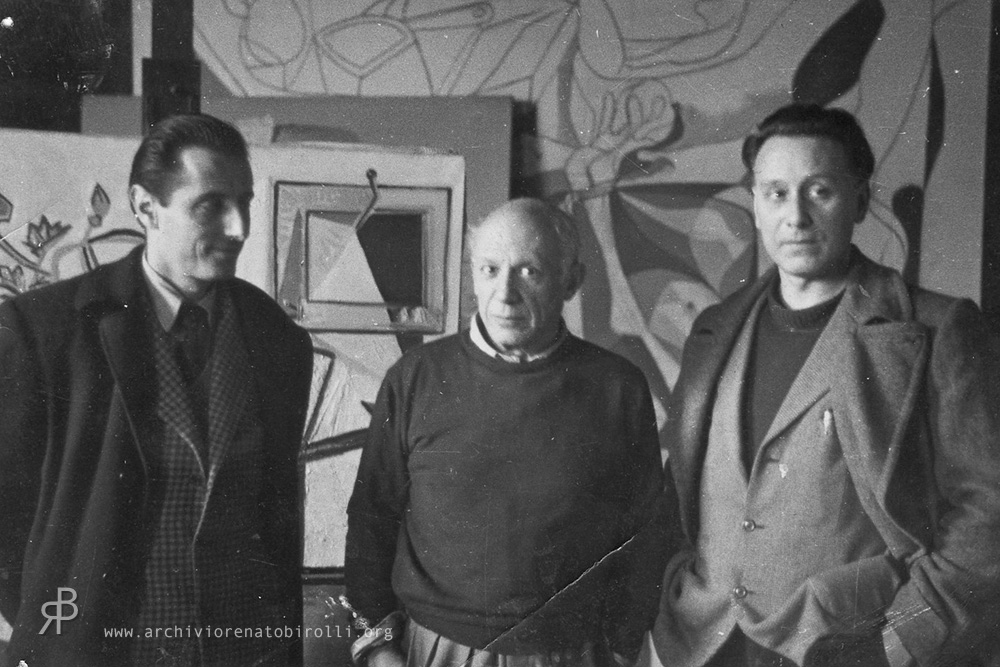
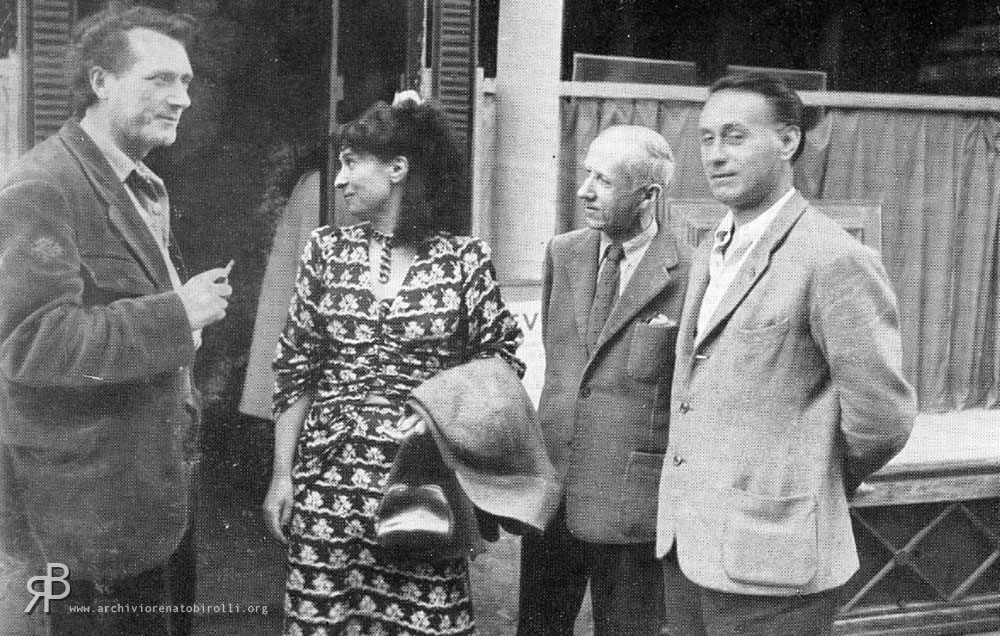
It was also in 1947 that Birolli met Achille Cavellini, who acquired Donna e luna, Le cupole di San Marco and the series of drawings Italia ’44, and soon became the artist’s foremost collector. In August and November of that year, Birolli exhibited at the Galleria del Cavallino in Venice and the Galleria dell’Annunciata in Milan, where he presented the results of his highly personal exploration of French post-Cubist syntax. Following the dissolution of the Fronte, he joined the Gruppo degli Otto, presented by Lionello Venturi at the XXVI Venice Biennale in 1952.
In 1948, Birolli exhibited at the Galleria Sandri in Venice and at the Prima Mostra Nazionale d’Arte Contemporanea in Bologna, an exhibition that drew the scorn of Palmiro Togliatti. Shortly afterwards, amid internal disputes and the hardening of the Italian Communist Party’s position in favour of Neorealist art, the Fronte Nuovo delle Arti fractured, although it formally continued its activities until 1950.
In 1949, Birolli held two solo exhibitions in Milan, at the Galleria del Milione and the Galleria dell’Annunciata, and spent several months in France and Brittany, particularly at La Trinité-sur-Mer, which inspired works such as Pescivendola bretone.